2026年前5个月已批准12.89万永久居民:加拿大PR名额,究竟给了谁?
Read in English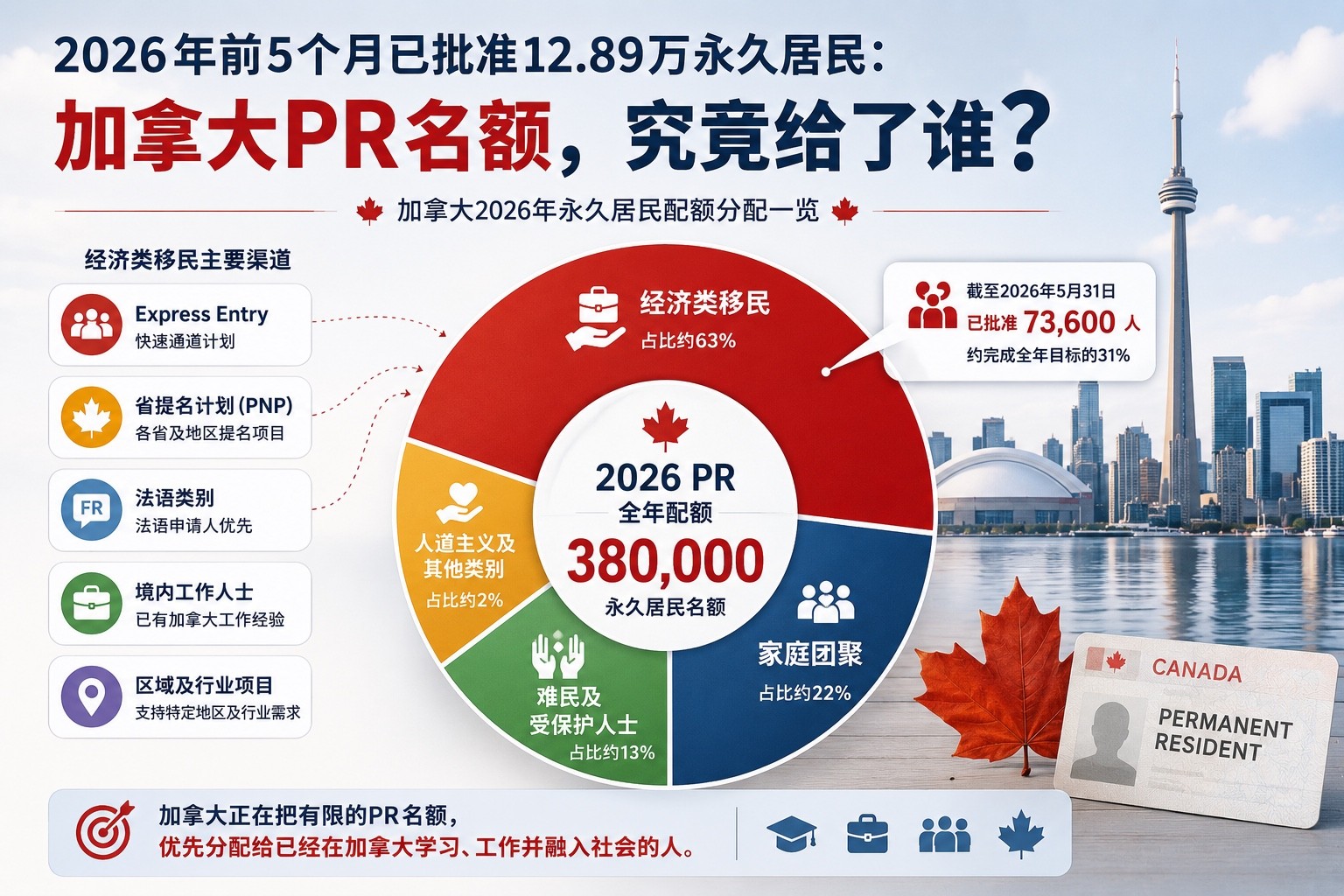
加拿大移民部(IRCC)近日上线新的永久居民 (Permanent Residence)统计页面, 首次以更加直观的方式公布2026年永久居民审批进度 及各类别配额使用情况。
截至2026年5月31日, 加拿大已批准128,900名新永久居民, 占全年380,000个移民目标的约34%。
对于计划申请加拿大永久居民的人来说, 真正值得关注的并不只是已经批准了多少人, 而是加拿大正在把有限的永久居民名额 优先留给哪些申请人。
2026年的数据表明, 经济类移民、已经生活在加拿大的申请人、 法语申请人以及符合区域和行业需求的人才, 仍然是加拿大永久居民政策的重要优先方向。
一、经济类仍然是加拿大移民的核心
2026年,经济类移民仍然占据最大的永久居民配额。
| 经济类移民 | 2026年全年目标 | 截至5月31日已批准 |
|---|---|---|
| Economic Immigration | 239,800 | 73,600 |
经济类移民约占整个永久居民计划的六成以上, 是加拿大移民体系中规模最大的类别。
这说明,尽管加拿大正在控制整体人口及临时居民增长, 对于能够较快进入劳动力市场、 填补职业和地区需求的人才, 加拿大仍然保持较高的移民需求。
Express Entry、省提名计划(PNP) 以及其他经济类移民通道, 仍然是加拿大永久居民体系的核心组成部分。
二、加拿大仍在优先考虑已经生活在境内的人
IRCC再次强调, 近年来大约一半的新永久居民, 在获得永久居民身份之前, 已经以临时居民身份生活在加拿大。
这些申请人可能曾经是:
- 国际学生;
- 毕业工签持有人;
- 临时外国工人;
- 配偶开放工签持有人;
- 其他持有合法临时身份的申请人。
这一政策方向与近期Express Entry 持续邀请加拿大经验类(CEC)、 省提名申请人、法语类别及其他定向类别的趋势一致。
加拿大正在减少新的临时居民流入, 但仍然会从已经在加拿大生活、学习和工作的人群中, 选择部分符合条件的申请人转为永久居民。
对于已经在加拿大学习或工作, 并希望转为永久居民的人来说, 这仍然是一个积极的政策信号。
不过,已经在加拿大生活, 并不意味着可以自动获得永久居民身份。
申请人仍然需要满足具体项目的语言、 工作经验、职业类别、综合排名、 省提名或雇主支持要求。
三、法语申请人继续获得政策支持
加拿大计划在2026年继续提高魁北克以外 法语移民所占的比例。
截至2026年5月底, 已有9,900名法语申请人成为加拿大永久居民。
近年来,法语能力已经不仅是一项额外加分因素, 也逐渐成为Express Entry及部分移民项目中 具有明显政策优势的条件。
对于英语和法语学习能力较强的申请人来说, 提高法语成绩可能显著扩大可以考虑的移民路径, 并提高获得邀请的可能性。
四、区域及行业项目的重要性持续上升
加拿大并不是只通过全国性的Express Entry 选择永久居民。
各类区域及行业项目也在继续推进,包括:
- Provincial Nominee Program(PNP);
- Atlantic Immigration Program(AIP);
- Rural Community Immigration Pilot(RCIP);
- Home Care Worker Pilots。
这些项目通常更加重视:
- 申请人的职业和工作经验;
- 当地雇主支持;
- 地区劳动力市场需求;
- 申请人是否愿意长期在当地生活和工作;
- 申请人与特定行业或社区的联系。
这反映出加拿大希望通过移民政策, 更精准地解决不同省份、地区和行业的劳动力需求。
五、加拿大PR名额主要给了谁?
综合2026年前五个月的数据和近期政策变化, 加拿大永久居民选择方向正在变得越来越清晰。
目前较受政策支持的申请人主要包括:
- 符合Express Entry经济类要求的申请人;
- 获得省提名的申请人;
- 具有加拿大工作或学习经验的境内申请人;
- 具备较强法语能力的申请人;
- 符合区域及行业移民项目要求的申请人;
- 能够较快融入加拿大劳动力市场的人才。
加拿大并不是简单地扩大或减少永久居民人数, 而是在更加精准地分配有限的PR名额, 把机会优先给予能够满足经济、语言、 地区和劳动力市场需求的申请人。
六、对申请人意味着什么?
对于计划申请加拿大永久居民的人来说, 只关注某一次抽签分数或者年度总配额, 往往不足以判断自己的真实机会。
申请人还需要综合考虑:
- 自己的职业是否属于当前重点行业;
- 是否拥有符合要求的加拿大工作经验;
- 语言成绩是否具有竞争力;
- 是否有机会获得省提名;
- 是否符合区域或社区移民项目;
- 现有身份是否能够维持到申请完成;
- 是否需要提前准备第二语言或雇主支持。
对于已经在加拿大学习或工作的人来说, 现在正是重新评估自身优势、 规划长期移民策略的重要时机。
我们的观察
2026年前五个月的永久居民数据, 并不仅仅是在说明加拿大已经批准了多少人。
更重要的是, 这些数据反映了加拿大正在通过有限的永久居民名额, 选择哪些类型的申请人。
经济类移民仍然是整个移民体系的基础; 已经在加拿大生活和工作的人继续获得政策关注; 法语申请人仍具有明显优势; 区域和行业项目的重要性也在持续提高。
真正重要的并不是128,900这个数字本身, 而是申请人的教育、工作经验、语言能力、 职业、地区和身份情况, 是否符合加拿大当前分配PR名额的方向。
申请提示
本文旨在分享加拿大移民政策及申请实践中的观察与分析, 仅供一般信息参考,并不能替代针对个案的专业意见。
加拿大移民申请通常涉及申请人的教育背景、工作经历、 家庭情况、身份状态、雇主条件及申请时间等多项因素。 即使面对同一项政策, 不同申请人的申请策略和适用项目也可能不同。
如果您希望了解自己的情况是否适合某项移民项目, 或希望在递交申请前获得更有针对性的建议, 欢迎与我们联系进行个人申请评估。
128,900 New Permanent Residents Approved in the First Five Months of 2026: Who Is Canada Prioritizing for PR?
Immigration, Refugees and Citizenship Canada has recently launched a new Permanent Residence statistics page, providing a clearer picture of Canada’s 2026 permanent resident admissions and progress toward its annual immigration targets.
As of May 31, 2026, Canada had approved 128,900 new permanent residents, representing approximately 34% of its annual target of 380,000 admissions.
For prospective immigrants, however, the most important takeaway is not simply how many permanent residents have already been approved.
The more important question is: who is Canada choosing to prioritize?
The latest data indicates that economic immigrants, applicants already living in Canada, French-speaking candidates and people who meet regional or sector-specific needs remain key policy priorities.
Economic Immigration Remains Canada’s Largest PR Category
Economic immigration continues to represent the largest share of Canada’s permanent resident plan.
| Economic Immigration | 2026 Annual Target | Approved by May 31 |
|---|---|---|
| Economic Immigration | 239,800 | 73,600 |
Economic immigration accounts for more than 60% of Canada’s overall permanent resident plan.
Despite efforts to better manage immigration and temporary resident levels, Canada continues to prioritize applicants who can participate in the labour market and contribute to long-term economic growth.
Express Entry, Provincial Nominee Programs and other economic immigration pathways remain at the centre of Canada’s immigration system.
Canada Continues to Prioritize Applicants Already Living in Canada
IRCC has emphasized that in recent years, approximately half of all new permanent residents were already living in Canada as temporary residents before becoming permanent residents.
These applicants may include:
- international students;
- post-graduation work permit holders;
- temporary foreign workers;
- spousal open work permit holders; and
- other applicants with valid temporary status.
This direction is consistent with recent Express Entry draws targeting Canadian Experience Class candidates, Provincial Nominee Program nominees, French-language candidates and other category-based groups.
Canada is reducing new temporary resident inflows while continuing to select some qualified applicants already living, studying and working in the country for permanent residence.
For people who are already studying or working in Canada, this remains an encouraging policy signal.
However, living in Canada does not automatically guarantee permanent resident status.
Applicants must still meet the language, work experience, occupational, ranking, provincial nomination or employer requirements of a specific immigration program.
French-Speaking Applicants Continue to Receive Strong Support
Canada continues to increase opportunities for French-speaking immigrants outside Quebec.
By the end of May 2026, 9,900 French-speaking applicants had already become permanent residents.
French-language ability is increasingly important not only as an additional ranking factor, but also as a distinct policy priority within Express Entry and other immigration programs.
Regional and Sector-Specific Programs Are Increasingly Important
Canada does not select permanent residents only through national Express Entry programs.
Regional and occupation-specific programs continue to play an important role, including:
- Provincial Nominee Program;
- Atlantic Immigration Program;
- Rural Community Immigration Pilot; and
- Home Care Worker Pilots.
These programs may place greater emphasis on:
- the applicant’s occupation and work experience;
- support from a local employer;
- regional labour market demand;
- the applicant’s intention to remain in the community; and
- connections to a particular industry or region.
This reflects Canada’s effort to use immigration more precisely to address labour shortages in specific provinces, regions and economic sectors.
Who Is Canada Prioritizing for Permanent Residence?
When the latest statistics are considered alongside recent immigration policy changes, Canada’s selection priorities become increasingly clear.
Applicants who may benefit from current policy directions include:
- applicants eligible under Express Entry economic programs;
- Provincial Nominee Program nominees;
- applicants with Canadian study or work experience;
- French-speaking applicants;
- applicants eligible under regional or sector-specific programs; and
- people who can integrate into the Canadian labour market quickly.
Canada is not simply increasing or reducing permanent resident admissions. It is allocating limited PR spaces more strategically toward applicants who meet economic, linguistic, regional and labour market priorities.
What Does This Mean for Applicants?
For prospective permanent resident applicants, a single draw score or the overall annual target may not provide a complete picture of their chances.
Applicants should also consider:
- whether their occupation is currently in demand;
- whether their Canadian work experience meets program requirements;
- whether their language results are competitive;
- whether they may qualify for provincial nomination;
- whether they meet the requirements of a regional immigration program;
- whether their current status can be maintained during processing; and
- whether French ability or employer support should be developed in advance.
Our Observations
The permanent resident statistics for the first five months of 2026 do more than show how many applicants have been approved.
They also reveal the types of applicants Canada is prioritizing through its limited permanent resident spaces.
Economic immigration remains the foundation of the system. Applicants already living and working in Canada continue to receive policy attention. French-speaking candidates retain a significant advantage, while regional and sector-specific pathways are becoming increasingly important.
The real value of the 128,900 figure is understanding whether an applicant’s education, work experience, language ability, occupation, location and immigration status align with Canada’s current priorities.
Application Insights
Canadian immigration policies continue to evolve, and every applicant has a unique background, occupation, employment history, immigration status and family situation.
The same policy can create very different opportunities for different applicants.
Rather than relying solely on general statistics, recent draw scores or individual experiences shared online, it is often more helpful to assess your own circumstances before deciding on an immigration strategy.
If you would like to determine whether you may qualify for Express Entry, a Provincial Nominee Program or another permanent residence pathway, we welcome you to contact us for a personalized assessment.