新学生人数减少83%:加拿大国际学生规模正在明显收缩
Read in English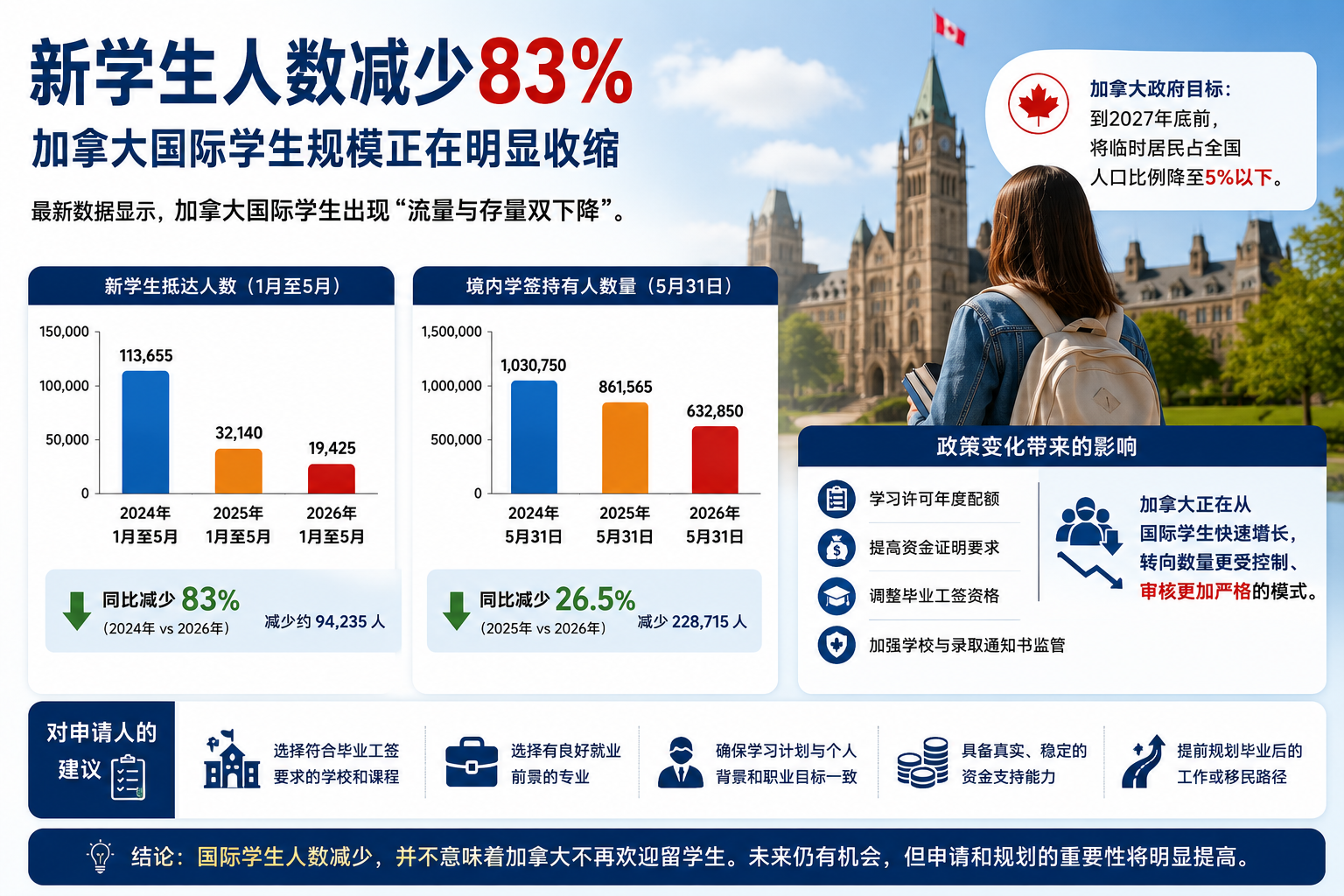
加拿大移民部(IRCC)最新公布的数据显示, 近两年实施的学签收紧措施, 已经明显影响加拿大国际学生的数量。
2026年1月至5月,IRCC统计的新学生抵达人数只有19,425人。 相比2024年同期的113,655人,减少约94,235人, 降幅达到83%。
截至2026年5月31日, 加拿大境内持有有效学习许可的人数为632,850人。 相比2025年同期的861,565人, 一年内减少228,715人,降幅约26.5%。
加拿大国际学生目前已经出现明显的“双下降”: 新进入加拿大的学生减少, 境内学签持有人的总量也在下降。
一、新学生抵达人数减少83%
| 时间 | 新学生抵达人数 |
|---|---|
| 2024年1月至5月 | 113,655 |
| 2025年1月至5月 | 32,140 |
| 2026年1月至5月 | 19,425 |
从2024年到2026年, 加拿大新学生抵达人数在两年内减少了约94,235人。
这说明学签申请数量、审批数量以及最终入境人数, 都已经受到加拿大留学生政策收紧的明显影响。
二、境内学签持有人也在减少
| 日期 | 境内学签持有人 |
|---|---|
| 2024年5月31日 | 1,030,750 |
| 2025年5月31日 | 861,565 |
| 2026年5月31日 | 632,850 |
截至2026年5月31日, 加拿大境内持有有效学习许可的人数为632,850人。
与2025年同期相比, 境内学签持有人减少约228,715人, 一年内下降约26.5%。
与2024年同期相比, 境内学签持有人总数的下降幅度则更加明显。
三、为什么国际学生人数正在下降?
过去两年,加拿大先后实施了一系列与国际学生有关的政策调整, 包括:
- 实施学习许可年度配额;
- 提高学习许可申请人的资金证明要求;
- 调整毕业工签资格及专业要求;
- 加强对学校和录取通知书的监管;
- 限制部分学校及课程所对应的毕业工签资格。
这些政策形成了更严格的学签申请及审查环境, 同时也减少了能够通过国际教育进入加拿大的申请人数量。
加拿大政府的目标之一, 是在2027年底前将临时居民占全国人口的比例降至5%以下。
四、这是否意味着加拿大不再欢迎留学生?
国际学生人数下降, 并不意味着加拿大不再接受国际学生。
更准确地说, 加拿大正在从过去快速扩张国际教育规模, 转向数量更受控制、审核更加严格的模式。
政策方向并不是完全停止接收留学生, 而是减少总体数量,并提高对学校、课程、 资金能力及真实学习目的的审查要求。
在新的政策环境下, 仅仅获得一份学校录取通知书, 已经不足以证明申请人适合获得学习许可。
移民官可能会更加关注申请人的教育背景、 课程选择、学习目的、资金来源以及毕业后的合理规划。
五、未来留学申请更需要长期规划
对于计划赴加留学的学生来说, 不能只考虑是否能够取得学校录取。
申请人还需要认真评估:
- 学校和课程是否符合毕业工签要求;
- 所学专业是否具有合理的就业前景;
- 学习计划是否与个人背景和职业目标一致;
- 家庭是否具备真实、稳定的资金支持能力;
- 毕业后是否存在可行的工作或移民路径。
学校、课程、专业方向和毕业后的发展路径, 应当在递交学习许可申请前进行综合考虑。
我们的观察
加拿大国际学生人数正在明显减少, 反映出过去两年留学生政策收紧已经开始产生实际影响。
不仅新进入加拿大的学生数量下降, 已经在加拿大境内持有学习许可的人数也在持续减少。
未来加拿大仍会接收国际学生, 但申请审核、学校选择和长期规划的重要性将明显提高。
对学生和家长来说, 留学选择需要更加重视教育质量、职业衔接和长期可行性, 而不能只考虑是否能够获得录取。
国际学生人数减少,并不意味着加拿大不再欢迎留学生。 未来仍然存在机会,但申请人需要面对数量更受控制、 审核更加严格的留学环境。
申请提示
本文旨在分享加拿大移民政策及申请实践中的观察与分析, 仅供一般信息参考,并不能替代针对个案的专业意见。
加拿大移民申请通常涉及申请人的教育背景、工作经历、 家庭情况、身份状态、雇主条件及申请时间等多项因素。 即使面对同一项政策, 不同申请人的申请策略和适用项目也可能不同。
如果您希望了解自己的情况是否适合某项移民或签证项目, 或希望在递交申请前获得更有针对性的建议, 欢迎与我们联系进行个人申请评估。
New Student Arrivals Down 83% as Canada’s International Student Population Shrinks
The latest figures released by Immigration, Refugees and Citizenship Canada show that recent restrictions on study permits are having a significant impact on Canada’s international student population.
Between January and May 2026, IRCC recorded only 19,425 new student arrivals.
This was approximately 94,235 fewer than during the same period in 2024, representing a decline of 83%.
As of May 31, 2026, there were 632,850 study permit holders in Canada.
Compared with 861,565 one year earlier, the total declined by 228,715, or approximately 26.5%.
Canada is now experiencing declines in both new student inflows and the total number of study permit holders already in the country.
New Student Arrivals Have Declined Sharply
| Period | New Student Arrivals |
|---|---|
| January to May 2024 | 113,655 |
| January to May 2025 | 32,140 |
| January to May 2026 | 19,425 |
Between 2024 and 2026, the number of new student arrivals during the first five months of the year declined by approximately 94,235.
This indicates that study permit restrictions are now affecting application volumes, approvals and actual arrivals in Canada.
The Number of Study Permit Holders Is Also Falling
| Date | Study Permit Holders in Canada |
|---|---|
| May 31, 2024 | 1,030,750 |
| May 31, 2025 | 861,565 |
| May 31, 2026 | 632,850 |
As of May 31, 2026, there were 632,850 valid study permit holders in Canada.
Compared with the same date in 2025, the total declined by approximately 228,715, or 26.5%.
Why Is Canada’s International Student Population Declining?
Over the past two years, Canada has introduced several major policy changes affecting international students, including:
- annual study permit caps;
- higher financial requirements;
- changes to post-graduation work permit eligibility;
- stronger oversight of schools and letters of acceptance; and
- restrictions affecting the eligibility of certain institutions and programs.
These measures have created a more restrictive environment for study permit applications and have reduced the overall number of international students entering Canada.
They also form part of the federal government’s plan to reduce temporary residents to less than 5% of Canada’s population by the end of 2027.
Does This Mean Canada No Longer Welcomes International Students?
The decline does not mean that Canada is no longer accepting international students.
Instead, the country is moving away from rapid expansion toward a smaller and more closely regulated international education system.
Canada is not completely closing its doors to international students. It is reducing overall numbers while applying closer scrutiny to institutions, programs, financial capacity and genuine study intentions.
In this new environment, obtaining admission from a Canadian institution may no longer be sufficient to support a successful study permit application.
Officers may examine the applicant’s academic history, program choice, purpose of study, financial circumstances and long-term plans more carefully.
Long-Term Planning Is Becoming More Important
Prospective students should consider more than whether they can obtain admission.
They should also assess:
- whether the institution and program qualify for a post-graduation work permit;
- whether the program offers reasonable employment prospects;
- whether the studies are consistent with their background and career goals;
- whether sufficient and sustainable financial resources are available; and
- whether a realistic employment or immigration pathway may exist after graduation.
School selection, program choice, career planning and post-graduation options should therefore be considered together before a study permit application is submitted.
Our Observations
The decline in Canada’s international student population demonstrates that the policy restrictions introduced over the past two years are now having a measurable impact.
Both new student arrivals and the number of existing study permit holders are declining.
Canada will continue to welcome international students, but careful school selection, career planning and long-term preparation will become increasingly important.
Students and their families should focus on educational quality, career outcomes and long-term feasibility, rather than considering admission alone.
Application Insights
Canadian immigration policies continue to evolve, and every applicant has a unique background, occupation, employment history, immigration status and family situation.
The same policy can create very different opportunities for different applicants.
Rather than relying solely on general information or individual experiences shared online, it is often more helpful to assess your own circumstances before deciding on an immigration or study strategy.
If you would like to determine whether a particular school, program or study permit strategy may be suitable for your circumstances, we welcome you to contact us for a personalized assessment.